Multimodal AI: What Modern AI Development Companies Offer in 2025

Artificial Intelligence (AI) has shifted from being a specialized tool for research labs to a mainstream business asset. The most striking development in recent years is the rise of multimodal AI, a new generation of systems that can process and combine different types of input text, images, video, audio, and even structured data into a single intelligent framework.
In 2025, multimodal AI isn’t just a technical curiosity. It has become one of the most practical areas of innovation that businesses of all sizes are adopting. Companies are no longer satisfied with single-mode systems that only analyze text or recognize images. They want solutions that can read documents, interpret visual cues, process speech, and generate meaningful outputs that mirror how humans think and communicate.
This blog explores what modern AI development companies offer when it comes to multimodal AI in 2025, why it matters, and how organizations can approach it with the right mix of strategy and execution.
What Is Multimodal AI?
Multimodal AI refers to artificial intelligence models that combine multiple types of input and output. Unlike traditional AI systems, which are usually designed to process one form of data, multimodal systems can integrate text, images, speech, and even real-world signals like sensor data.
For example:
A medical AI that analyzes radiology scans, interprets a doctor’s notes, and listens to recorded patient symptoms before suggesting a diagnosis.
A customer support bot that can read a user’s query, recognize uploaded screenshots, and provide both text and video-based responses.
An educational platform that generates personalized lesson plans by interpreting handwritten notes, recorded lectures, and video-based questions from learners.
This integration allows businesses to build smarter, context-aware applications that feel closer to human interaction.
Why 2025 Is the Year of Multimodal AI
Several trends have aligned to make multimodal AI a mainstream priority in 2025:
Advancements in Generative AI Large multimodal models like OpenAI’s GPT-4o and Google’s Gemini are showing businesses what’s possible when AI processes multiple data types. Instead of using one model for text and another for images, companies are shifting toward unified solutions.
Growing Business Demand Enterprises are seeking more intuitive AI-driven applications that can interact naturally with employees and customers. For instance, e-commerce companies want AI systems that can analyze product descriptions, interpret customer-uploaded photos, and provide recommendations instantly.
Accessible Infrastructure Cloud providers and AI platforms have made it easier for development teams to train, fine-tune, and deploy multimodal systems without building everything from scratch.
Practical Use Cases Businesses are no longer experimenting just for novelty. From logistics to healthcare to retail, organizations are rolling out applications that solve immediate, measurable problems.
Core Offerings from Modern AI Development Companies
When businesses hire an AI Development Company in 2025, they’re not just looking for coding support. They’re expecting end-to-end expertise across data engineering, model building, deployment, and ongoing optimization. Multimodal AI projects are complex, and companies need structured services that cover every layer of the solution.
Here are the most common offerings:
1. Strategy and AI Consulting Services
Before building multimodal systems, businesses need clarity on feasibility, costs, compliance, and integration. AI consulting company & teams help organizations:
Identify business areas where multimodal AI creates measurable value.
Select the right models and tools (open-source vs. proprietary).
Define a roadmap for implementation that balances technical ambition with budget and resource availability.
This stage is critical because multimodal projects require diverse datasets and technical infrastructure.
2. Custom AI Development Services
Off-the-shelf solutions don’t always fit complex enterprise requirements. Development companies create custom multimodal models that:
Combine text, image, audio, and structured data inputs.
Support domain-specific vocabulary or visual recognition (for example, interpreting medical scans or financial documents).
Deliver outputs in the form most useful to the business, such as dashboards, visual insights, or natural language responses.
By building customized pipelines, companies help clients move beyond generic AI capabilities into practical applications.
3. Full-Stack AI Development
In 2025, multimodal AI isn’t just about the model; it’s about the ecosystem. Full-stack services include:
Data pipelines for ingesting text, images, video, and sensor data.
APIs and microservices for connecting models with enterprise software.
User interfaces where employees or customers interact with AI outputs.
Deployment infrastructure for cloud, on-premises, or hybrid setups.
Modern businesses expect AI to integrate into their daily workflows, not exist as an isolated experiment.
4. Generative AI Development
Generative systems are the backbone of multimodal AI. Companies build applications that:
Convert text prompts into images, videos, or interactive content.
Generate code, documents, or visualizations from mixed inputs.
Create personalized responses by synthesizing text, visuals, and audio.
This area is particularly attractive in industries like media, entertainment, e-learning, and marketing, where content creation is both time-consuming and resource-heavy.
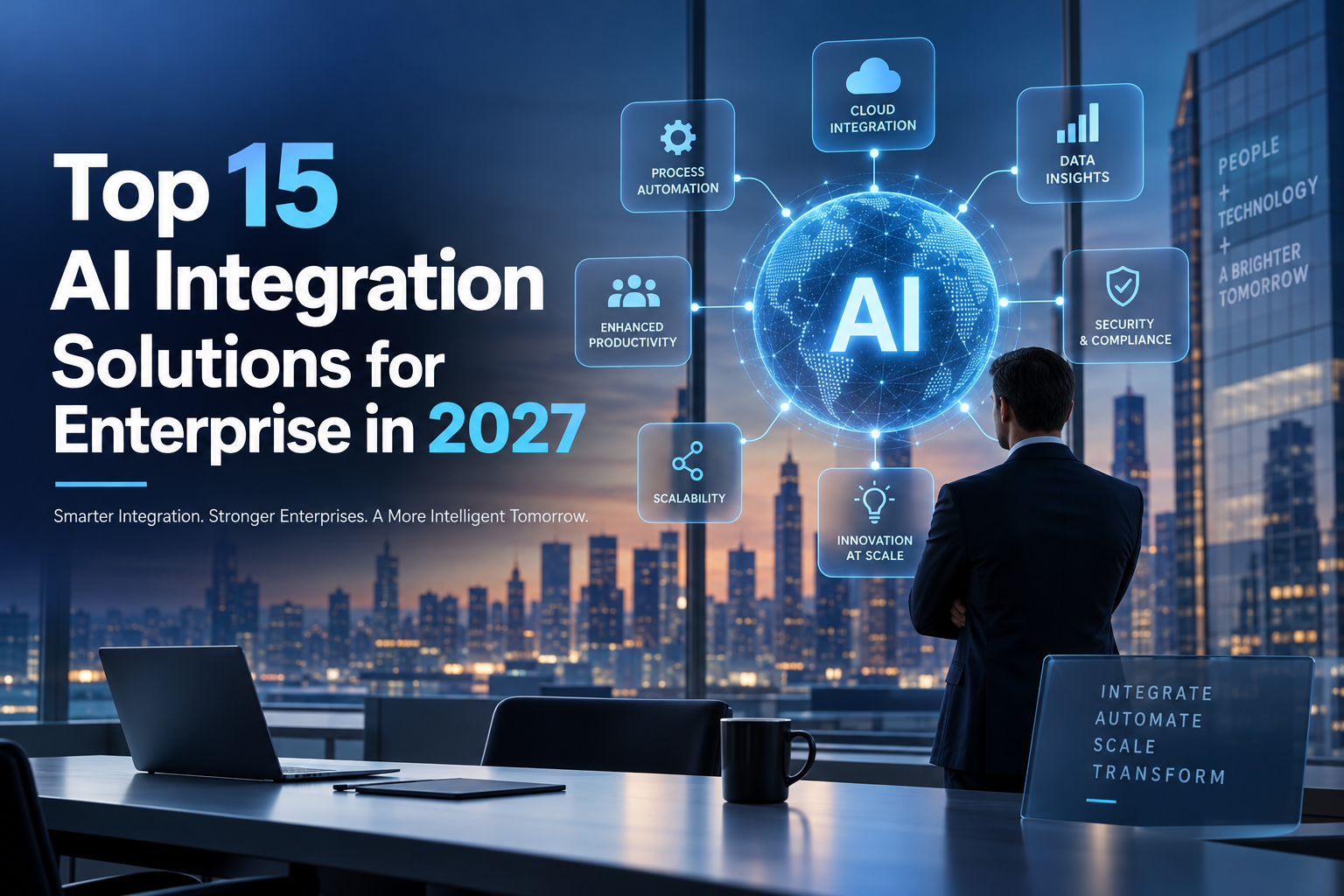
5. AI Integration Services
Multimodal AI is rarely built in isolation. It needs to integrate with CRMs, ERPs, cloud data warehouses, and customer-facing platforms. Integration teams focus on:
Embedding AI into existing enterprise software stacks.
Synchronizing multimodal models with real-time business workflows.
Handling compliance with industry-specific regulations like HIPAA, GDPR, or financial reporting standards.
Without this integration, AI projects often remain stuck in pilot phases.
Industry Use Cases in 2025
Businesses are no longer asking “what can multimodal AI do?” Instead, they’re asking “where can we use it right now?” Below are some real-world applications driving adoption:
Healthcare Hospitals and clinics use multimodal AI to analyze diagnostic images, combine them with patient records, and interpret physician notes for faster decision-making.
Retail and E-Commerce Platforms combine customer queries, product descriptions, and uploaded photos to generate more accurate recommendations and support responses.
Manufacturing Multimodal systems combine IoT sensor data, visual inspections, and operational reports to predict maintenance needs and reduce downtime.
Education Learning platforms integrate text-based curriculum with video lectures, interactive exercises, and student feedback to personalize teaching experiences.
Financial Services Banks and fintech companies process contracts, transaction records, and customer calls simultaneously to detect fraud or improve advisory services.
Challenges and Considerations
Even with the excitement, multimodal AI projects in 2025 face real challenges:
Data Complexity: Gathering clean datasets across multiple formats is harder than working with text or images alone.
Model Interpretability: Understanding how multimodal systems make decisions is more complex, which raises questions about accountability.
Infrastructure Costs: Running large multimodal models requires significant computational power, which can be expensive without careful planning.
Regulatory Compliance: Laws are evolving quickly, especially around medical and financial applications.
These hurdles don’t stop adoption but highlight why businesses prefer partnering with experienced development companies.
What Sets a Reliable AI Development Partner Apart
Not all providers offer the same depth of expertise. When evaluating potential partners, organizations in 2025 often look at:
Technical Breadth: Can the provider handle data pipelines, modeling, deployment, and ongoing monitoring?
Industry Experience: Do they understand domain-specific data and regulations?
Support and Maintenance: Is there a plan for model retraining and system scaling?
Collaboration Models: Do they provide flexible engagement, from pilot projects to enterprise-wide rollouts?
These factors separate short-term vendors from long-term technology partners.
The Road Ahead for Multimodal AI
Looking forward, multimodal AI is moving toward even more advanced capabilities:
Real-Time Interactivity: AI systems that can process live video feeds, audio inputs, and text queries at once.
Personalized Context: Models that adjust outputs not only by input type but also by individual user history and preferences.
Cross-Device Continuity: Multimodal AI that flows across phones, laptops, IoT devices, and AR/VR environments.
Ethical Guardrails: Companies putting more emphasis on fairness, transparency, and accountability in how multimodal systems operate.
For businesses, this means the technology isn’t just about building smarter apps today; it’s about preparing for continuous innovation.
Final Thoughts
Multimodal AI is quickly moving from early experimentation to widespread adoption. By combining text, visuals, audio, and data streams, it enables applications that feel closer to natural human interaction. In 2025, businesses aren’t just curious about these systems; they’re actively implementing them to improve efficiency, decision-making, and customer engagement.
The companies that succeed will be those that approach multimodal AI with a clear strategy, realistic goals, and the right technical expertise. For organizations that want to move beyond generic tools and explore solutions built for their specific needs, Custom AI Development Services can provide the foundation to make that possible.
Comments
Join the discussionNo comments yet. Be the first to comment.