Generative AI Integration Services: A Complete Implementation Guide
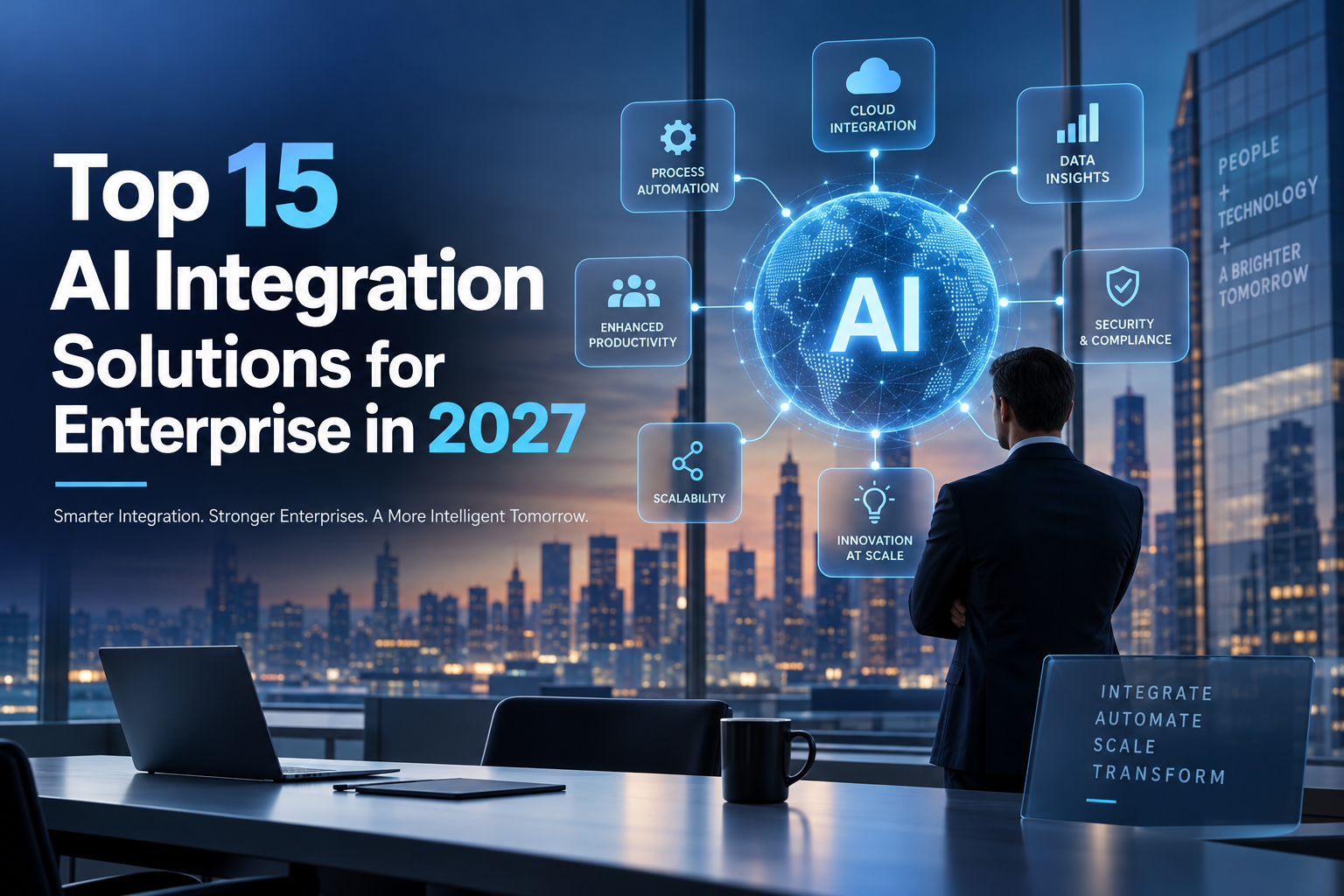
Generative AI has moved from pilot projects to production systems running inside customer support, sales, finance, healthcare, and software engineering teams. The question for most leaders in 2026 is no longer whether to adopt it, but how to integrate it correctly so it produces measurable results without breaking compliance, budgets, or existing workflows.
This guide walks through what Generative AI integration services actually involve, the trends shaping decisions this year, how to evaluate a Generative AI development company, and the practical steps for a working rollout.
What Are Generative AI Integration Services?
Generative AI Integration Services are professional services that connect large language models, multimodal models, and AI agents to a company's existing software, data sources, and business processes. The work usually covers four layers: model selection, data pipeline setup, application logic, and security controls.
Unlike a standalone chatbot demo, integration means the AI reads from real systems (CRM, ERP, knowledge bases, ticketing tools), writes back to them, and operates within role-based access rules. A well-built integration behaves less like a separate tool and more like a new capability inside the software your team already uses.
How Generative AI Integration Differs From Standard AI Development
• Scope: Standard AI development often ends at a trained model. Integration ends at a working business outcome inside production software.
• Data handling: Integration requires retrieval pipelines, vector stores, and connectors to live data, not static training sets.
• Governance: Integration projects must address access control, audit logs, and human review steps from day one.
• Maintenance: Models, prompts, and guardrails need ongoing tuning as data and user behavior shift.
Why Generative AI Integration Matters in 2026
Three shifts have changed the calculation for businesses this year.
Agentic AI Has Reached Production Maturity
In 2026, agentic systems can plan multi-step tasks, call external tools, and complete work with limited supervision. Gartner and Forrester both report that a growing share of enterprise AI deployments now include autonomous or semi-autonomous agents handling specific workflows like ticket triage, invoice processing, and lead qualification. Integration services are how those agents get connected to the right tools and the right guardrails.Small Language Models Are Eating Specialized Use Cases
Compact, fine-tuned models running on private infrastructure now match or beat larger general models on narrow tasks at a fraction of the cost. Companies are mixing small models for routine work with frontier models for harder reasoning. Integration work increasingly involves model routing logic, not just picking one provider.Regulation Is Now a Build Requirement
The EU AI Act, India's Digital Personal Data Protection rules, and updated US state laws have made auditability and data residency non-negotiable for many sectors. Integration projects in 2026 budget for compliance documentation from the start rather than retrofitting it later.Multimodal Inputs Are Standard
Voice, image, video, and document understanding now sit inside the same workflows. A claims agent can describe damage by phone, attach photos, and have the system draft a settlement memo. Integration services build the connective tissue across these modalities.
Core Components of Generative AI Solutions
A production-grade Generative AI integration usually contains six building blocks:
• Foundation model layer: The chosen LLM or multimodal model, accessed through an API or self-hosted (OpenAI, Anthropic, Google, Meta Llama, or open-weight alternatives).
• Retrieval-Augmented Generation (RAG) pipeline: Vector databases and search logic that feed the model relevant context from internal documents.
• Agent orchestration: Frameworks such as LangGraph, CrewAI, or custom orchestrators that handle multi-step reasoning and tool use.
• Integration connectors: APIs and middleware linking the AI to Salesforce, HubSpot, SAP, Microsoft 365, Slack, internal databases, and similar systems.
• Guardrails and evaluation: Content filters, output validators, prompt injection defenses, and automated evaluation suites.
• Monitoring and observability: Logging, drift detection, cost tracking, and feedback loops for continuous improvement.
Industries Using Generative AI Development Services
Adoption is now broad but the highest-value use cases cluster in specific functions.
Healthcare
Clinical documentation, prior authorization summaries, and patient intake. Integration work focuses heavily on HIPAA compliance and EHR connectivity.
Financial Services
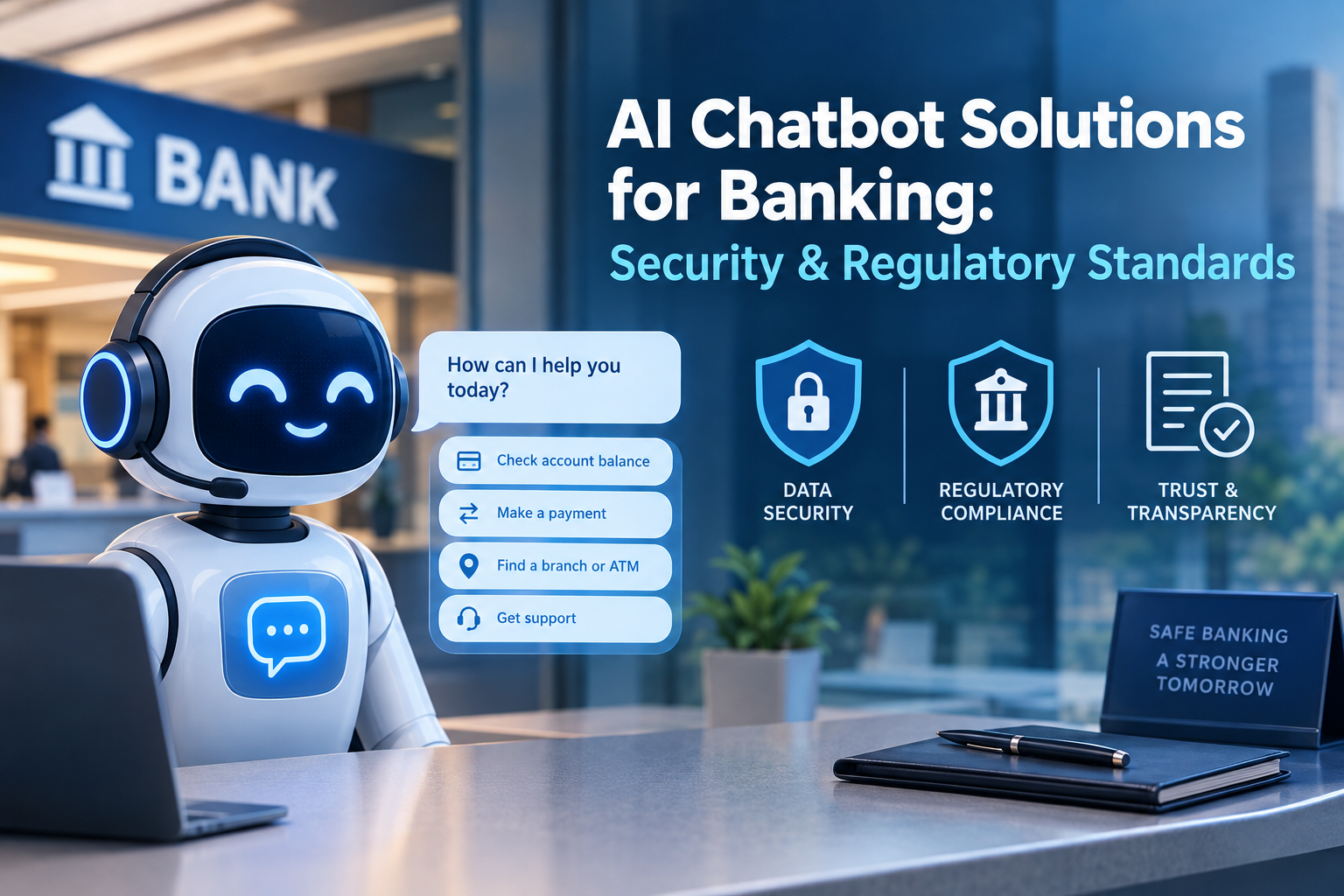
Fraud narrative generation, KYC document review, advisor copilots, and earnings analysis. SOC 2 and model risk management documentation are core deliverables.
Retail and E-commerce
Product description generation at catalog scale, personalized shopping assistants, and inventory forecasting copilots.
Software and SaaS
In-product AI assistants, automated code review, customer support deflection, and developer productivity tooling.
Manufacturing and Logistics
Maintenance log analysis, supplier email drafting, and AI agents that coordinate between ERP and warehouse systems.
How to Choose a Generative AI Development Company
The market has expanded quickly, and the gap between vendors who can deliver and those who cannot is wider than it appears on a sales call. Use these criteria to filter.
Real Production References
Ask for case studies with named clients, business metrics (cost reduction, accuracy, time saved), and access to a technical reference. Demo videos and Proof-of-Concept stories are not the same as a running production system.Model-Agnostic Approach
A capable AI Consulting Company should be able to recommend the right model for your problem rather than push one vendor. Ask how they evaluate options and how they handle model migration when better ones launch.Data Engineering Depth
Most Generative AI projects fail at the data layer, not the model. Look for a team that talks as much about ingestion pipelines, document parsing, chunking strategies, and evaluation datasets as it does about prompt engineering.Security and Compliance Posture
Check certifications (SOC 2, ISO 27001), data handling policies, and willingness to work inside your VPC or private cloud. For regulated industries, this is a hard requirement.Post-Launch Support Model
Generative AI systems drift. Confirm what ongoing tuning, evaluation, and incident response look like after handover.
If you are evaluating partners, a useful starting point is to review providers offering full-cycle Generative AI Development Services that cover discovery, build, integration, and ongoing optimization in one engagement, since handoffs between separate vendors are where most projects lose momentum.
A Practical Implementation Roadmap
A workable Generative AI integration project tends to follow five phases over 8 to 16 weeks for a focused use case.
Phase 1: Discovery and Use Case Scoping (1-2 weeks)
Identify two or three candidate use cases. Score them on business value, data readiness, and risk. Pick one to build first. Define success metrics before any code is written.
Phase 2: Data Audit and Preparation (2-3 weeks)
Map the data sources the AI will read. Clean and structure them. Set up the vector store and retrieval pipeline. This phase is often underestimated and is where most projects slip.
Phase 3: Build and Internal Pilot (3-5 weeks)
Develop the application, connect tools and APIs, write prompts and guardrails, and run an internal pilot with five to twenty users. Collect structured feedback.
Phase 4: Evaluation and Hardening (2-3 weeks)
Run automated evaluations, red team for prompt injection and hallucination, set up monitoring dashboards, and finalize compliance documentation.
Phase 5: Production Rollout and Iteration (Ongoing)
Launch to the wider team, track adoption and quality metrics, and plan a quarterly tuning cycle. Expect prompt and retrieval changes every few weeks for the first six months.
Common Pitfalls to Avoid
• Starting with the model instead of the problem: Pick a business outcome first, then choose the technology.
• Skipping evaluation: Without a test set and scoring rubric, you cannot tell if changes improve or hurt quality.
• Treating it as a one-time build: Generative AI systems need continuous tuning the same way search ranking systems do.
• Ignoring user training: Most adoption failures come from users not knowing how to phrase requests or when to verify outputs.
• Underbudgeting inference costs: Token usage scales with adoption. Model routing, caching, and prompt optimization save significant spend at scale.
Measuring ROI From Generative AI Solutions
Useful KPIs depend on the use case, but the strongest projects track a mix of the following:
• Time saved per task (hours per week, per user)
• Deflection rate for support and internal helpdesk queries
• Accuracy or first-pass acceptance rate of AI-generated outputs
• Revenue lift from AI-assisted sales or marketing motions
• Cost per resolved ticket, per generated document, or per qualified lead
• User adoption rate and weekly active usage
Mature programs review these monthly and tie them back to the business case set in Phase 1.
Final Thoughts
Generative AI Integration Services in 2026 are less about novelty and more about disciplined engineering. The companies getting real returns are the ones treating it like a software product: clear scope, measurable goals, strong data foundations, ongoing iteration, and serious attention to security.
Whether the work is handled internally, with a Generative AI development company, or a hybrid of both, the playbook is the same. Start small, measure honestly, and build the operational muscle to keep improving the system after launch.
Comments
Join the discussionNo comments yet. Be the first to comment.